ServicesPool Drain and Refill
Pool Drain and Refill in Rio Verde
When your water stops responding to chemicals, a drain and refill resets it. We test first to confirm a drain is actually needed, empty the pool on a planned schedule and refill it without stopping. Then we balance the fresh water so it is ready to swim.
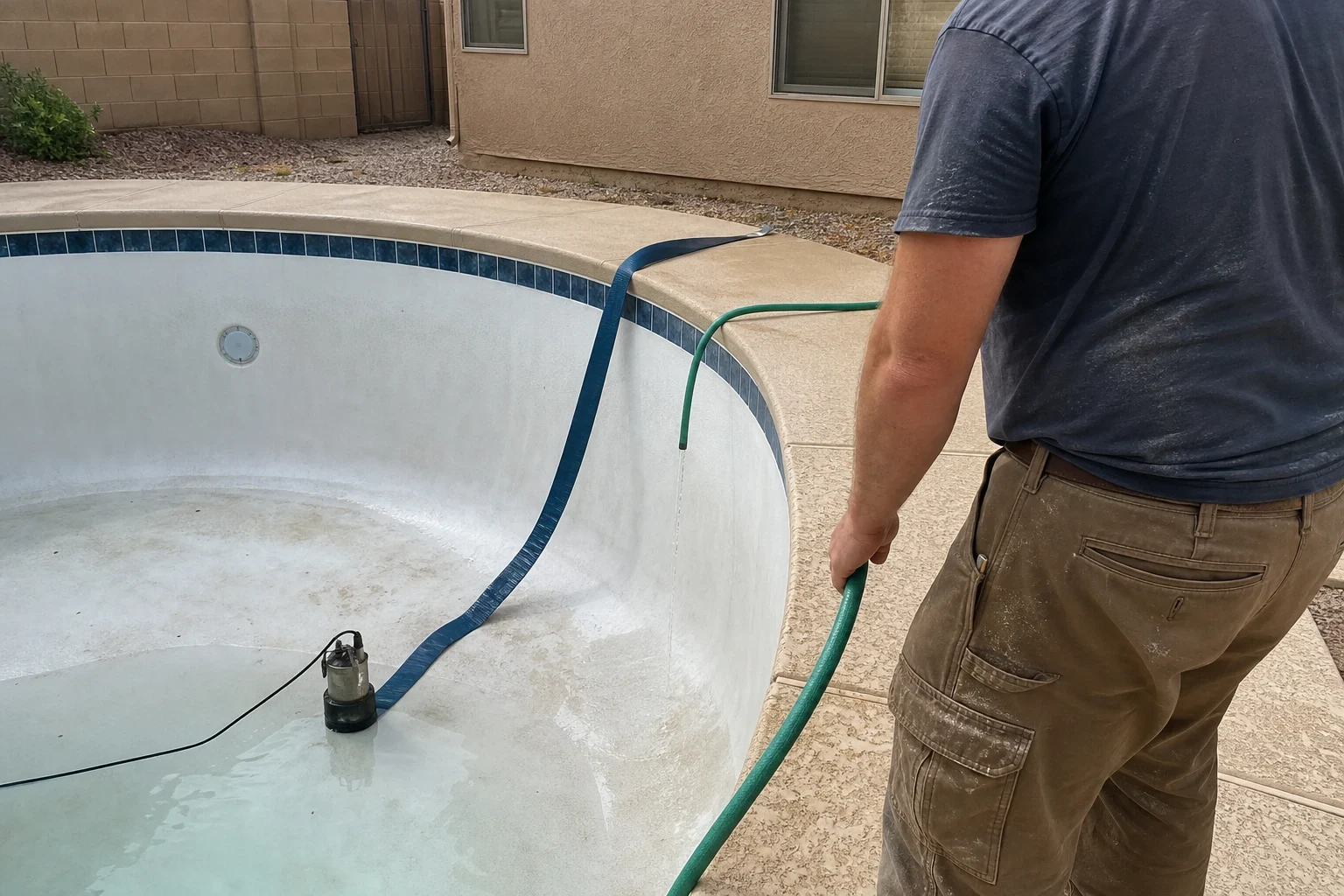
Why Old Pool Water Has to Go
Every week, sun and heat evaporate water from your pool, but the minerals stay behind. Each top-off adds more calcium, and every chlorine tablet adds cyanuric acid (CYA). Over time, total dissolved solids (TDS), calcium hardness and CYA rise past the point where any chemical can correct them. The result is cloudy water, scale on tile and equipment, and chlorine that is in the water but too bound up to sanitize.
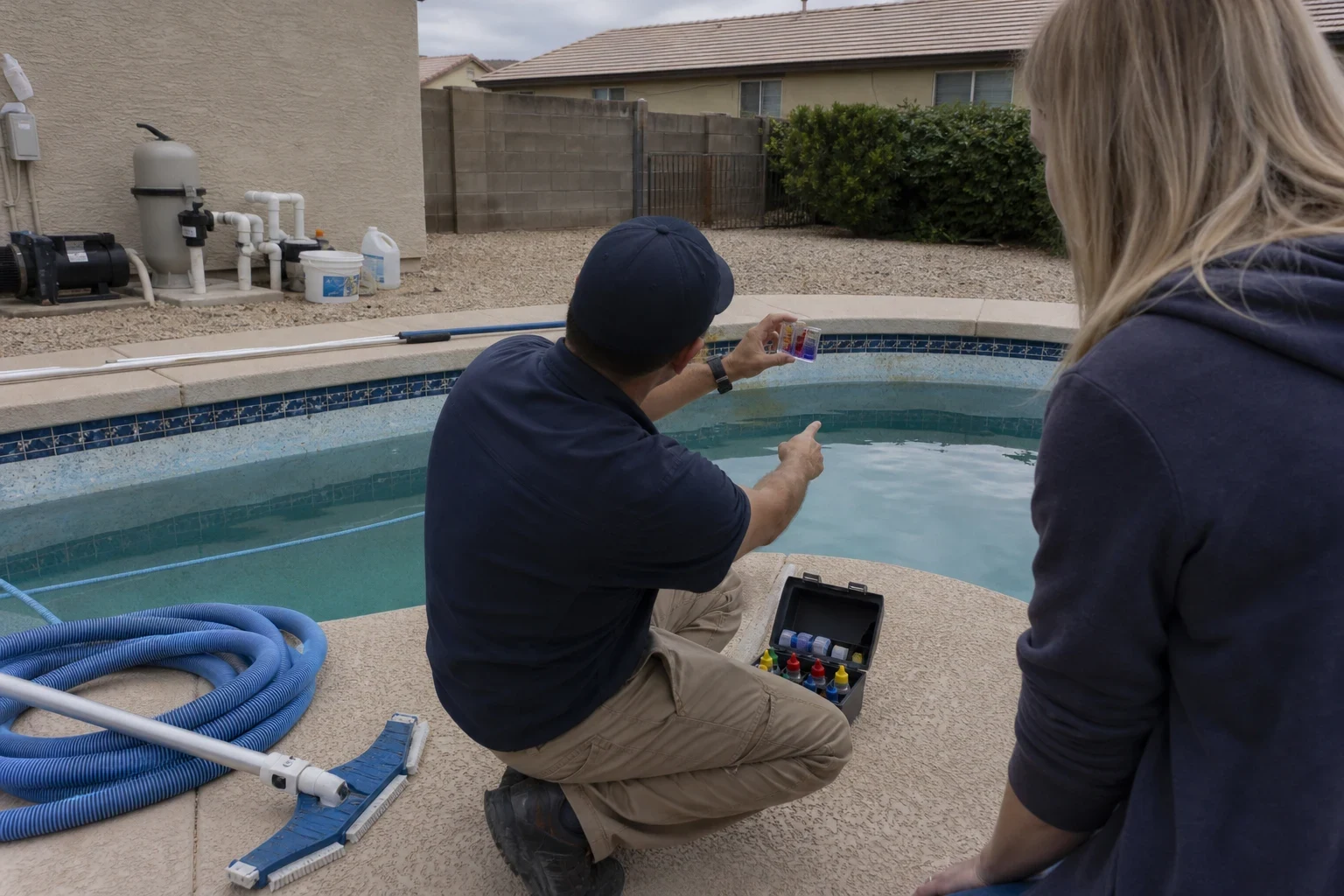
A drain and refill is the only practical way to lower those numbers. We do not recommend it on a hunch. We measure TDS, calcium hardness and CYA, show you the readings, and tell you whether a full drain, a partial drain or simply better balancing makes the most sense for your home.
What the Drain and Refill Includes
- 01
Water testing before we quote
We test TDS, calcium hardness, CYA, pH and alkalinity so the decision rests on numbers, not guesswork.
- 02
Planned discharge
We confirm where the water can go at your home, usually a sewer cleanout rather than the street or a wash. We let chlorine drop before pumping so the discharge is not heavily chlorinated.
- 03
Equipment shutdown and protection
We turn off the pump and heater at the breaker so nothing runs dry. Running a pump without water burns out the shaft seal and can warp the impeller housing.
- 04
Empty-shell inspection
With the pool empty, we look at the plaster, the tile line, the main drain cover and the return fittings, and we photograph anything worth your attention. If the surface is stained or rough, an acid wash or calcium removal and tile cleaning can be done in the same window.
- 05
Continuous refill and startup chemistry
We refill without stopping so no ring line forms in the plaster. On fresh fill we add a metal sequestrant, set pH and alkalinity, add stabilizer in measured amounts and brush the surface.
Questions about Pool Drain and Refill?
Call(480) 478-2836Signs Your Pool Is Due for Fresh Water
TDS above about 2,500 ppm
High dissolved solids make chlorine less effective and leave water dull even when the filter is clean.
CYA stuck high
Once stabilizer climbs well past 100 ppm, chlorine is so bound up that algae can grow at normal readings. Dilution is the only fix.
Scale keeps coming back
White crust at the waterline or on heater elements and salt cells points to calcium hardness the water can no longer hold.
Chemicals stop working
If you add more acid, chlorine and clarifier every week and the water still drifts, the base water is usually the problem.
Planned surface work
An acid wash, a repair below the waterline or a stubborn green to clean recovery often calls for an empty pool anyway.
How the Job Runs
- 1
Test and schedule
We test your water, explain the readings and pick a day with mild weather. Late fall through spring is best, because summer sun can crack and discolor plaster that sits dry even for a few hours.
- 2
Drain
A submersible pump moves the water to the approved discharge point while we monitor the hose run. A typical residential pool empties in most of a day, depending on volume and the cleanout's capacity.
- 3
Inspect and clean
We hose down the walls to keep plaster from drying out, check the hydrostatic relief valve in the main drain and clear debris. Any add-on surface work happens now.
- 4
Refill
Water goes back in from your hose bibs at full flow, without interruption, until it reaches mid-tile. We prime the pump and restart the system.
- 5
Balance and brush
We bring the fresh water into balance and brush daily for the first few days. If you have weekly pool cleaning with us, the next visits keep that balance on track.
What Affects the Cost
Every pool is a different volume with a different hose run, so we price after we see your water and your yard. Your quote is written by line item, so you can see the drain, any surface work and the startup chemicals separately. The water itself is billed by your water provider, not by us.
- Pool volume
- Larger and deeper pools take longer to pump out, longer to refill and more startup chemicals to balance.
- Discharge route
- A cleanout near the pool is quick. A long hose run, or a property where the water has to go somewhere else, adds time.
- Surface condition
- Clean plaster needs only a rinse. Heavy scale or staining may call for acid washing or tile work while the pool is empty.
- Full or partial drain
- Sometimes lowering the water by a third or half brings CYA and TDS back in range for less cost and less risk to the shell.
Drain and Refill Questions
How often does a pool need to be drained here?
In our hard-water area, many pools need fresh water every few years, but the timing depends on how much you top off and what chlorine you use. Pools run on chlorine tablets build CYA faster. We go by test results rather than the calendar.
Can draining damage my pool?
It can if it is done carelessly. Groundwater pressure can lift an empty shell, and dry plaster can craze in direct sun. We check the hydrostatic relief valve, keep the surface wet and refill as soon as the work is done to reduce both risks.
How long until we can swim again?
Most pools are drained and refilled over about two days. Once the fresh water is balanced, swimming is usually fine within a day or two. Brand new plaster from a repair has its own startup schedule, which we will walk you through.
Will this make my water bill spike?
You will pay for the refill volume on your next bill, roughly the gallon capacity of the pool. Fresh fill water also needs fewer chemicals for months afterward, which offsets part of that.
Should I do an acid wash at the same time?
If the plaster is stained or scaled, yes, because the pool has to be empty for an acid wash anyway. If the surface is in good shape, a rinse is enough and we will say so.
Find Out If Your Water Needs Replacing
We will test your TDS, calcium and CYA, then tell you plainly whether a full drain, a partial drain or better balancing is the right move.