ServicesEquipment Installation
Pool Equipment Installation in Rio Verde
We replace and install pool pumps, filters, heaters, salt chlorine generators and automation at your home. Each part is sized to your pool's volume and pipe diameter, wired and plumbed correctly, then started up with you watching so you know how it should run.
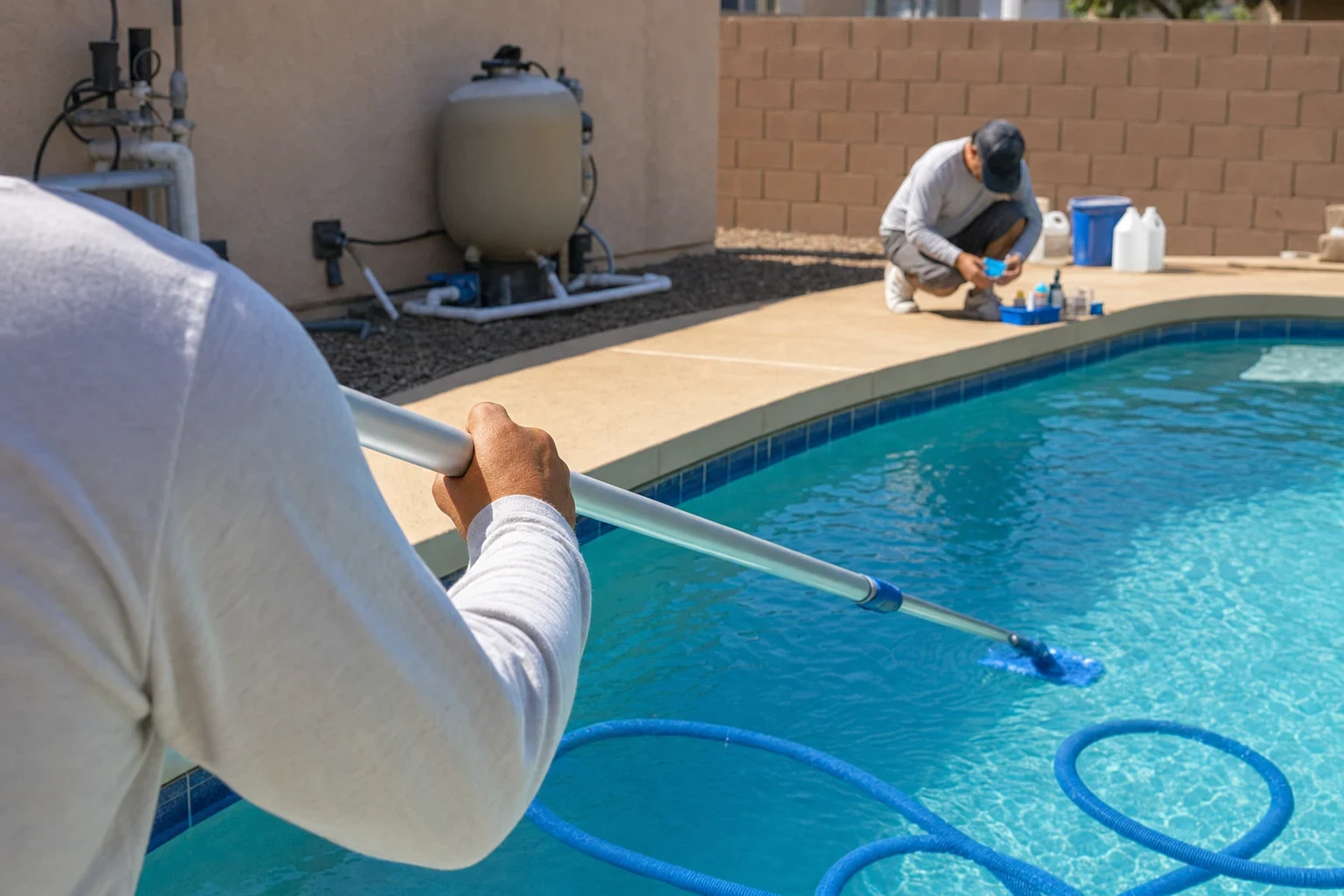
New equipment that fits the pool you actually have
A pool pad is a system. The pump, filter, heater and sanitizer all depend on the same pipe size and flow rate, so a new part that does not match the rest can starve a heater, overwork a filter or burn power for no gain. Before we recommend anything, we measure the pool, look at the pipe diameter and count the fittings between the skimmer and the return.
Most pumps we replace today become variable-speed units. Federal efficiency rules that took effect in 2021 mean most replacement inground pumps must be, and running one at low RPM for longer hours filters better and uses far less electricity than an old single-speed motor.
Sometimes the right answer is a repair, not a new part. If a failed capacitor or a worn shaft seal is the real problem, we will say so and point you to our pool repair service instead.
What an installation includes
Variable-speed pumps
We size the pump to your total dynamic head, not just horsepower on a label. We program run schedules for filtration, cleaner use and any water features so the motor spends most of its hours at low speed.
Cartridge, sand and DE filters
We match filter square footage to pump flow. Cartridge filters are common here because they need no backwash water, and we will explain the tradeoffs if you are deciding between types.
Gas heaters and heat pumps
We check gas line size and meter capacity before a gas heater goes in, and breaker size for a heat pump. A heater that is undersupplied will short-cycle and fault.
Salt chlorine generators
We install the cell, flow switch and control board, then set output to your pool volume. Hard water scales salt cells quickly, so we show you how to inspect and clean the plates.
Automation and controls
We connect pumps, heaters, lights and valve actuators to a single controller and set the schedules with you before we leave.
Replumbing the pad
We replace sun-brittle PVC, add unions so parts can be serviced later, and glue joints with primer and cement rated for pool pressure.
Signs your equipment is ready for replacement
A pump that screams or hums
A high whine usually means motor bearings are failing. A hum with no spin often points to a seized impeller or a dead motor that is no longer worth rebuilding.
Filter pressure that will not settle
If pressure climbs right after a cleaning, the cartridge may be collapsed or the filter is too small for the pump. Either one leaves the water cloudy.
Heater faults and soot
Repeated ignition errors, black soot at the burner or a corroded heat exchanger mean the heater is unsafe to keep patching.
Cracked housings and lids
Years of desert sun make plastic pump lids and filter tanks brittle. A crack under pressure can split without warning.
Power bills that keep rising
An old single-speed pump running eight hours a day costs much more than a variable-speed unit doing the same work.
How installation day runs
- 1
Quote and sizing by phone and on site
You call, we talk through what is failing, and we look at the pad. You get a written quote that lists each part, the plumbing changes and any electrical or gas work.
- 2
Shutdown and removal
We turn off breakers, isolate valves and drain the old equipment. Old parts are hauled away unless you want to keep them.
- 3
Plumb, wire and bond
New equipment is set level on the pad, plumbed with unions and connected to the bonding wire so every metal part is at the same electrical potential. If a gas or electrical permit is needed, we tell you before work starts.
- 4
Start-up and walkthrough
We prime the pump, purge air, check for leaks and confirm flow and pressure. Then we show you the controls, the schedule and what normal readings look like.
What moves the price of an installation
No two pads are the same, so we price each job after seeing it. The part itself is often only part of the cost. Plumbing, power and access usually make up the difference.
- Equipment type and size
- A variable-speed pump, a large cartridge filter and a heat pump each sit at very different price points, and bigger pools need bigger units.
- Plumbing changes
- Moving to a new brand often means different port sizes. Replacing old PVC, adding unions or rerouting lines adds labor and fittings.
- Electrical and gas work
- A heat pump may need a new breaker and wire run. A gas heater may need a larger gas line, which can add a permit and an inspection.
- Pad access and condition
- Tight side yards, cracked pads or equipment set on loose gravel take more time to work around or correct.
Equipment installation questions
Something not covered here? (480) 478-2836
Do I really need a variable-speed pump?
For most replacement inground pumps, yes, because federal efficiency rules now require it. The upside is real: running at low speed for longer moves water through the filter more gently and cuts electricity use significantly. We set the schedule so you see the savings.
Can you install equipment I bought myself?
Often we can. We check that the part is the right size and type for your pool before we install it. If it is undersized or the wrong voltage, we tell you before anything is plumbed in.
Should I go with a gas heater or a heat pump?
Heat pumps work well here for much of the year and cost less to run, but they heat slowly and lose efficiency on cold nights. Gas heaters warm a pool quickly on demand and suit spas and short heating windows. We look at how you use the pool before recommending one.
How long will the pool be down?
Most single-part swaps are finished in one visit. Jobs with new gas lines, a heat pump circuit or a full pad replumb can take longer, and we give you the timeline in the quote.
Is a salt system easier than chlorine tablets?
A salt cell makes chlorine steadily, so you stop handling tablets. It still needs pH checks and periodic cell cleaning, and hard water makes scale a regular chore. Our weekly pool cleaning service can keep both in check.
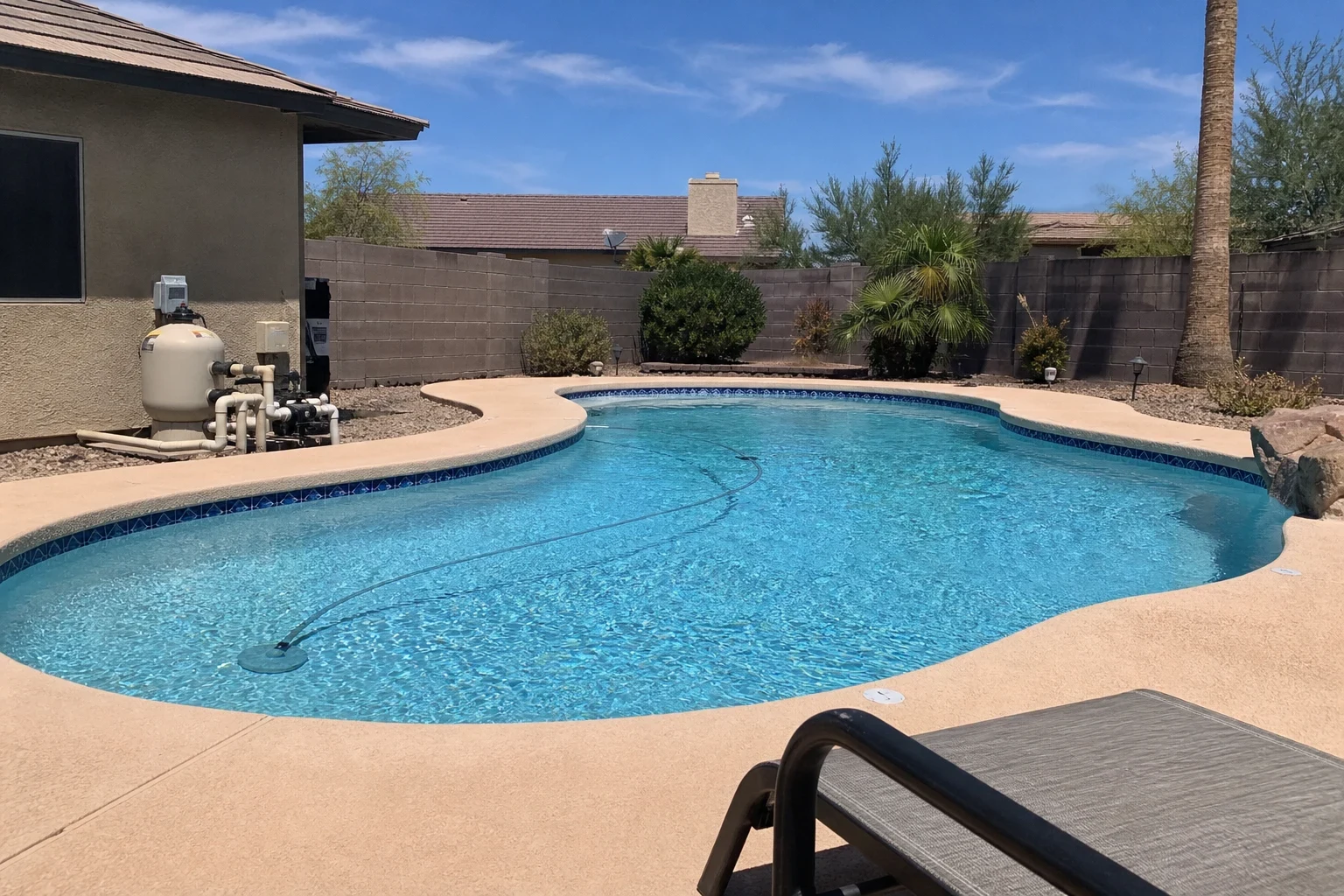
Find out what your pad really needs
Tell us what is failing and how you use your pool. We will size the equipment, explain your options and give you a clear written quote.