ServicesAcid Washes
Acid Washes in Rio Verde
When stains and scale have set into your plaster and brushing no longer moves them, an acid wash removes a thin outer layer of the finish to expose clean material underneath. We drain, wash, neutralize and refill, and we tell you first whether your plaster can take it.
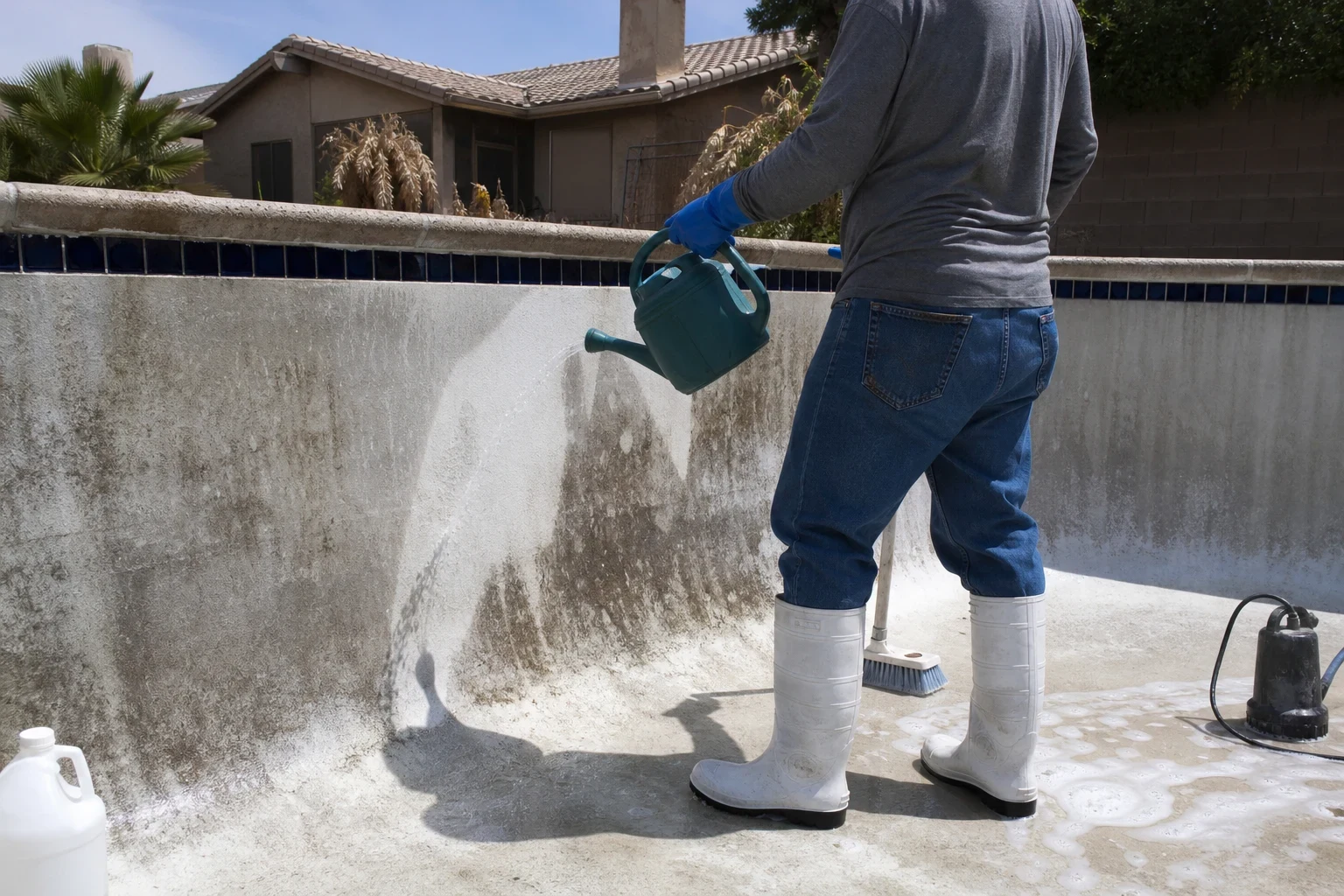
What an Acid Wash Does to Your Plaster
Pool plaster is a mix of white cement and marble dust or sand. Over time, metals from source water, leaves, algae and calcium bond into the top of that surface. Chlorine and brushing handle what sits on the plaster. They cannot reach what has soaked into it. An acid wash uses diluted muriatic acid to dissolve a very thin layer of the cement paste, taking those stains and deposits with it.
That removal is the point, and it is also the cost. Each wash makes the plaster a little thinner, so it is a tool to use a few times over the life of a finish, not every year. Before we quote one, we look at how thick and sound your plaster is. If it is already thin, rough or pulling away from the shell, we will say so and talk through repair options instead of selling you a wash that will not last.
Our hard, calcium-heavy water is a big reason plaster here grays and scales faster than the same finish would in a softer-water region, which is why timing and good water balance afterward matter as much as the wash itself.
What the Job Includes
Plaster condition check
We inspect the empty shell for hollow spots, cracks and delamination by sight and by tapping. You get an honest answer on whether a wash makes sense.
Controlled draining
We pump the pool down and discharge the water according to local rules for where pool water may go. We open the hydrostatic relief plug where the pool has one.
Sectioned acid application
The diluted acid goes on one section at a time and is scrubbed, then rinsed before it can etch too deep. Stubborn spots get a targeted second pass rather than a stronger mix across the whole pool.
Neutralizing and residue removal
The acid water that collects in the deep end is neutralized with soda ash and pumped out. Nothing acidic goes back into your plumbing or onto your yard.
Refill and start-up chemistry
We refill, then balance pH, alkalinity and calcium hardness for freshly exposed plaster, which is more reactive for the first few weeks.
Signs Your Pool Needs an Acid Wash
Stains that brushing will not lift
Brown, green-brown or rust-colored blotches usually point to metals or organic matter set into the plaster. If a chemical spot treatment and a stiff brush do nothing, the stain is below the surface.
Dingy gray plaster
White plaster that has gone dull gray all over has usually absorbed fine scale and debris. A wash can bring back a lot of the original brightness.
After a green pool recovery
A pool that sat green for weeks often keeps a shadow of algae and leaf staining even once the water is clear. A wash is a common last step after our green to clean recovery.
Black algae that keeps coming back
Black algae roots into plaster pores. Removing that top layer takes out the roots along with the dark spots.
Rough patches catching on feet
Light scale crust on the floor or steps can often be dissolved in a wash. Deep pitting is a different problem and may call for pool repair.
How the Day Runs
- 1
Drain and inspect
We start early, pump the pool down and check the bare plaster once it is visible. If we find hollow or failing areas, we stop and talk with you before any acid goes on.
- 2
Wash in sections
Working from the shallow end down, we wet each wall section, apply the diluted acid, scrub and rinse it off. We keep the surface wet so the acid does not dry and burn in, which matters most in warm weather.
- 3
Neutralize and clean out
The runoff pooled in the deep end gets neutralized with soda ash, then pumped out. We rinse the shell again and clean out the main drain area.
- 4
Refill and balance
We start the refill the same day. Once full, we bring the water into balance and leave you clear instructions for brushing and running the pump while the new surface settles.
What Moves the Price of an Acid Wash
Every wash involves the same basic steps, but the labor and materials change a lot from pool to pool. We look at your pool in person before quoting so the number reflects what is actually there. You get the quote by phone, with no charge for it.
- Surface area and depth
- A larger pool with a deep end and spa has more plaster to wash and more water to drain and replace. Attached spas and baja shelves add hand work.
- How set-in the stains are
- Light graying may clear in one pass. Heavy metal staining or black algae can need extra targeted passes, which adds time and acid.
- Plaster condition
- If the inspection turns up cracks or delaminated spots, those need attention before or alongside the wash. We price any repair work separately and only with your go-ahead.
- Refill water
- The water to refill is billed by your utility, not by us. Its cost depends on your pool's volume and your water rates.
Acid Wash Questions
Something not covered here? (480) 478-2836
How often can my plaster be acid washed?
Most plaster finishes handle a handful of washes over their life, spaced several years apart. Each one removes a little material, so the real limit is how thick your plaster still is. We check that before every job and will tell you if another wash would leave it too thin.
Will an acid wash make my pool look brand new?
It usually makes a big visible difference, especially on gray or stained white plaster. It will not fill pits, fix cracks or even out color in plaster that was mottled from the start. We tell you what to expect for your pool before we begin.
Can you acid wash a pebble or vinyl pool?
Vinyl liners should never be acid washed; the acid damages the liner. Pebble and quartz finishes can sometimes take a gentler wash to expose the aggregate, but they need a different approach than standard plaster. We look at the finish first and recommend only what suits it.
When is the best time of year to do it?
Spring and fall are ideal. Leaving a shell empty in midsummer heat risks the plaster drying out and cracking, and the acid is harder to control on hot surfaces. We plan the timing so the pool is empty for as short a stretch as possible.
How long will we be without the pool?
The drain, wash and start of the refill usually happen in one day, and filling takes as long as your water supply needs. After that, the water needs a few days of balancing before swimming. We tell you when it is ready.
What should we do after the wash?
Brush the plaster daily for the first week or two and keep the water balanced, because freshly exposed plaster reacts quickly to off chemistry. Many owners have us take over with weekly pool cleaning, where chemicals are included in the monthly price and the first month of weekly service is free.
Find Out If Your Plaster Is a Good Candidate
Tell us what the stains look like and how old the finish is. We will set up a time to look at your pool and give you a straight answer on whether a wash will help.