ServicesCalcium Removal and Tile Cleaning
Calcium Removal and Tile Cleaning in Rio Verde
That white or gray crust along your waterline is mineral scale left behind as water evaporates. We figure out what kind it is, remove it with the right method for your tile, and explain how to keep it from building back as fast.
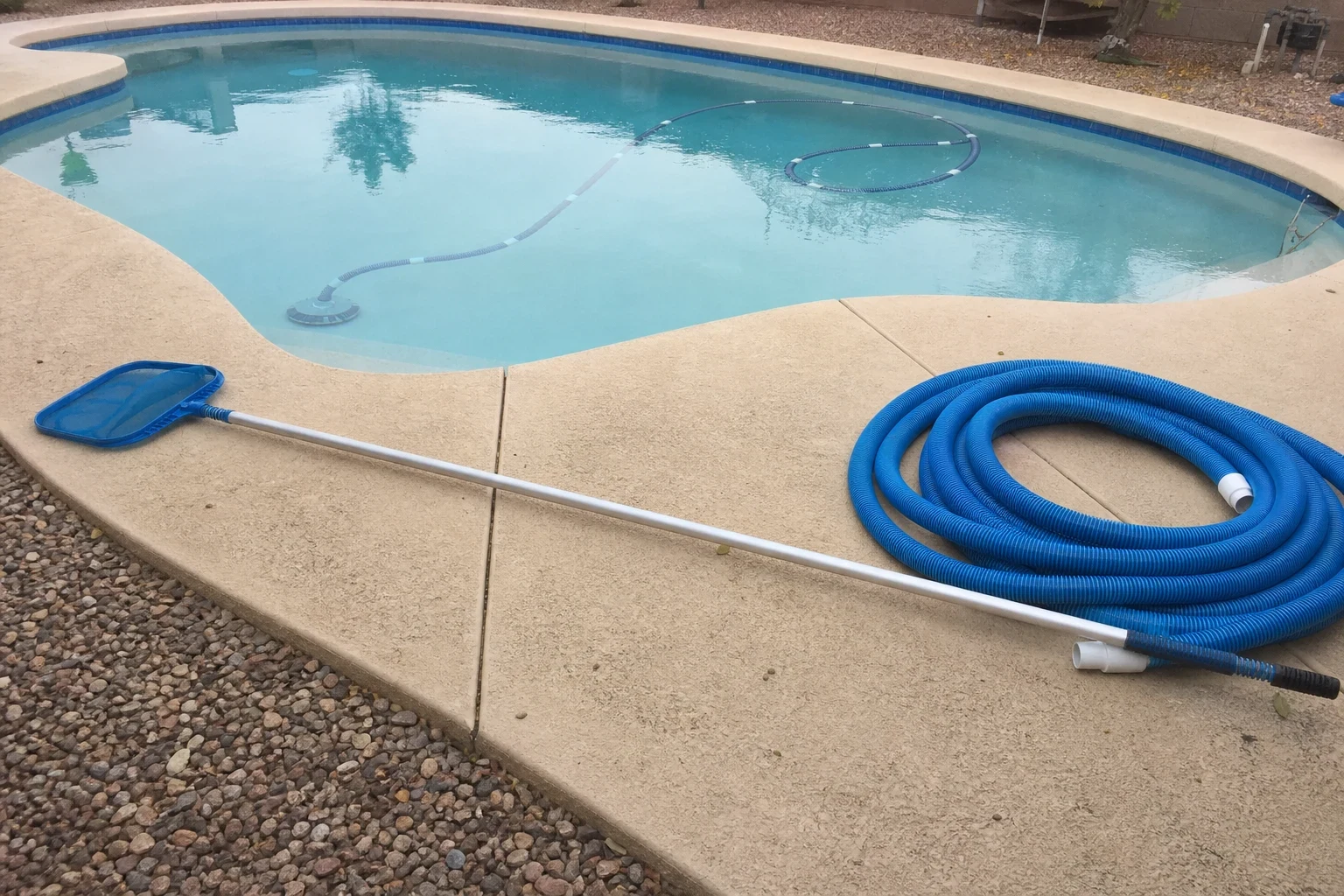
What calcium removal actually involves
Every time pool water evaporates, the dissolved minerals stay behind. Calcium is the main one, and it deposits wherever the water line rises and falls, which is usually the band of tile at the top of the wall. Desert sun and hard fill water make this faster around Rio Verde than in most of the country.
Not all scale is the same. Calcium carbonate is white, chalky and softer, and it usually comes off with a mild acid treatment and hand scrubbing. Calcium silicate is gray-white, glassy and much harder. It bonds tightly to tile glaze and often needs low-pressure glass bead blasting or careful pumice work. Treating silicate like carbonate wastes time and money, and using blasting where it isn't needed can dull some tile.
So we start by testing the scale and looking closely at your tile type and grout before we choose a method.
What the service includes
Scale identification
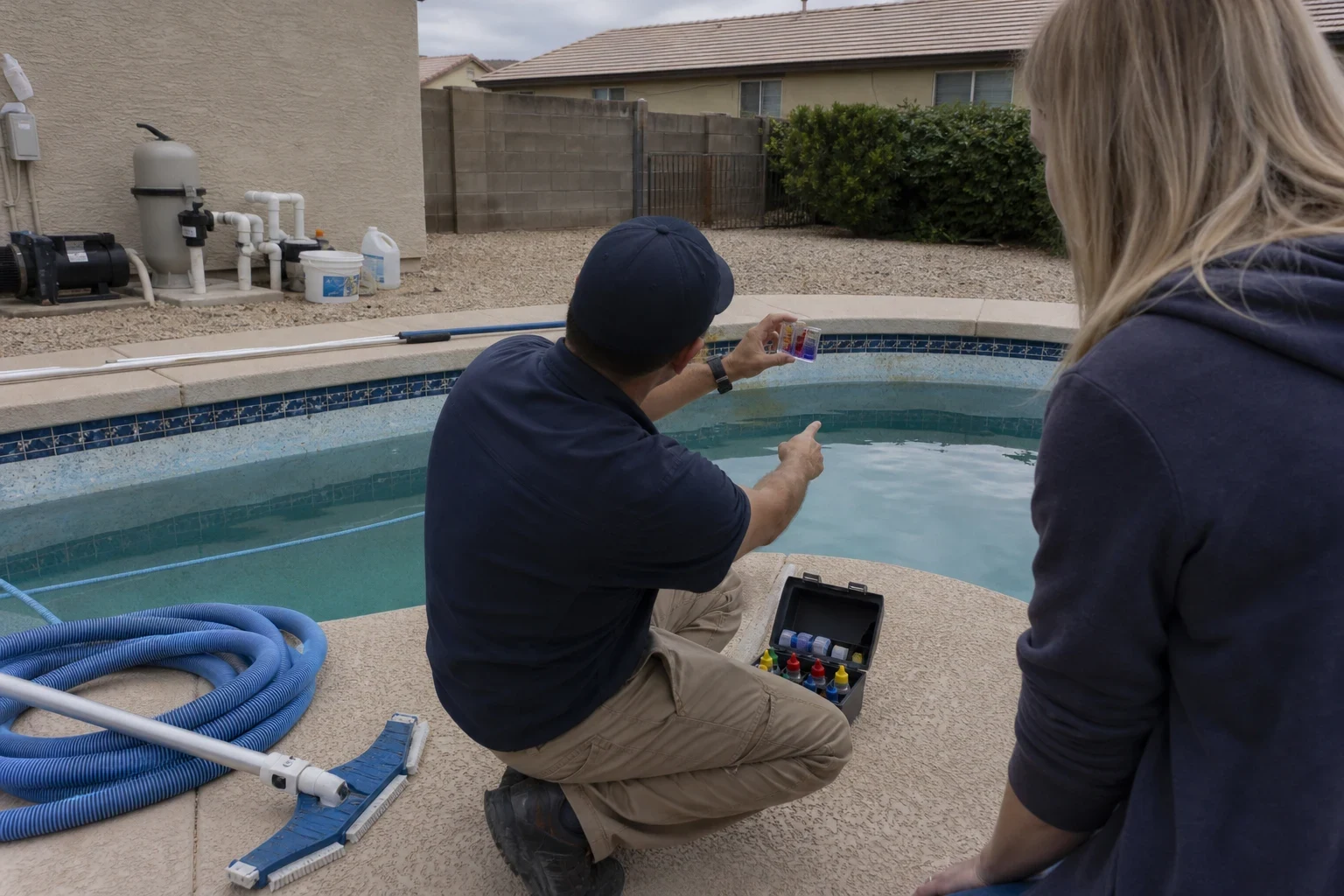
We test a small area with a weak acid. Carbonate fizzes and softens; silicate barely reacts. That result decides the method and the time the job takes.
Tile and grout inspection
We check for loose tiles, missing grout and cracked glaze before any work starts. If tiles are already failing, we show you and talk about pool repair rather than blast around the problem.
Bead blasting or hand removal
For hard silicate on ceramic or porcelain tile, we use fine glass bead media at low pressure. Glass tile and softer stone get hand methods and scale remover instead, since media can haze them.
Water features and spillways
Scale builds heavily on spa spillways, sheer descents and rock features where water sheets and evaporates. We include these when you want them done.
Media and debris cleanup
Blasting media and loosened scale fall into the pool. We vacuum it out to waste, brush the walls, and rinse the deck and coping so nothing grinds into your finish.
Chemistry check after the job
We test pH, alkalinity and calcium hardness when we finish, because those numbers decide how quickly scale returns.
Signs your tile needs calcium removal
- A white or gray band at the waterline
- A crusty line on the tile that a brush won't move is scale, not dirt.
- Rough texture you can feel
- Run a hand along the tile. If it feels like sandpaper or has raised nodules, deposits have built up in layers.
- Scale on spillways and fixtures
- White streaks on spa overflows, return fittings or light rings point to the same chemistry working throughout the pool.
- Tile color looks faded
- A thin film of carbonate can mute dark or blue tile long before it looks crusty.
- Cloudy water with high pH
- If your pH keeps creeping up and the water looks dull, the pool is likely scaling as you watch. Fixing the chemistry matters as much as cleaning the tile.
How the job runs on the day
- 1
Lower the water if needed
For blasting, we bring the water a few inches below the tile so we can reach the full band. If your level is already low from evaporation, we may not need to drain at all.
- 2
Protect the area
We cover nearby equipment, glass doors and plantings, and shut off the pump so media doesn't reach the filter.
- 3
Remove the scale
We work section by section, checking the tile surface as we go so we stop as soon as the glaze is clean.
- 4
Clean up and refill
We vacuum the media to waste, brush and rinse, then bring the water back up. Fresh fill water shifts your chemistry, so we rebalance before we leave.
What moves the price
We price after we see the pool and test the scale, because two pools with the same perimeter can take very different amounts of work. You get the quote by phone after we've looked, with the method and the reasons spelled out.
- Scale type and thickness
- Light carbonate cleans quickly. Thick silicate layers built up over years take far longer and need blasting.
- Tile perimeter and features
- Linear feet of tile is the base. Spa spillways, raised walls and rock features add time.
- Tile material
- Glass and natural stone need slower hand methods, which take longer than blasting ceramic tile.
- Water level and drainage
- If the water has to be lowered significantly, that adds pumping and refill time. When scale also covers the plaster, a full pool drain and refill with an acid wash may be the better choice.
Calcium removal questions
- Will bead blasting scratch my tile?
- On glazed ceramic and porcelain at low pressure with fine glass media, it removes scale without cutting the glaze. Glass tile and soft stone are different, so we use hand methods on those. We test a small spot first when there's any doubt.
- How long until the scale comes back?
- That depends mostly on your water chemistry and how often you top off. With pH and calcium hardness kept in range and the waterline brushed regularly, buildup slows a lot. With neglected chemistry, a visible line can return within one hot season.
- Can I just use a pumice stone myself?
- On light carbonate and ceramic tile, a wet pumice stone works if you go gently. It will scratch glass tile, and on thick silicate it takes hours and often leaves an uneven surface.
- Do I need to drain the pool?
- Usually no. We lower the water a few inches below the tile and refill when we're done. A full drain only makes sense if the plaster also needs an acid wash or the water's calcium hardness is too high to manage.
- How do I keep the tile clean afterward?
- Balanced water is the main defense. Our weekly pool cleaning includes waterline brushing and chemistry, with chemicals included in the monthly price, and a Pool Health Report via email after each visit so you can see the numbers.
Get your waterline tile looking right again
Tell us about the tile and how long the line has been building. We'll come look, test the scale and give you a clear plan and price.